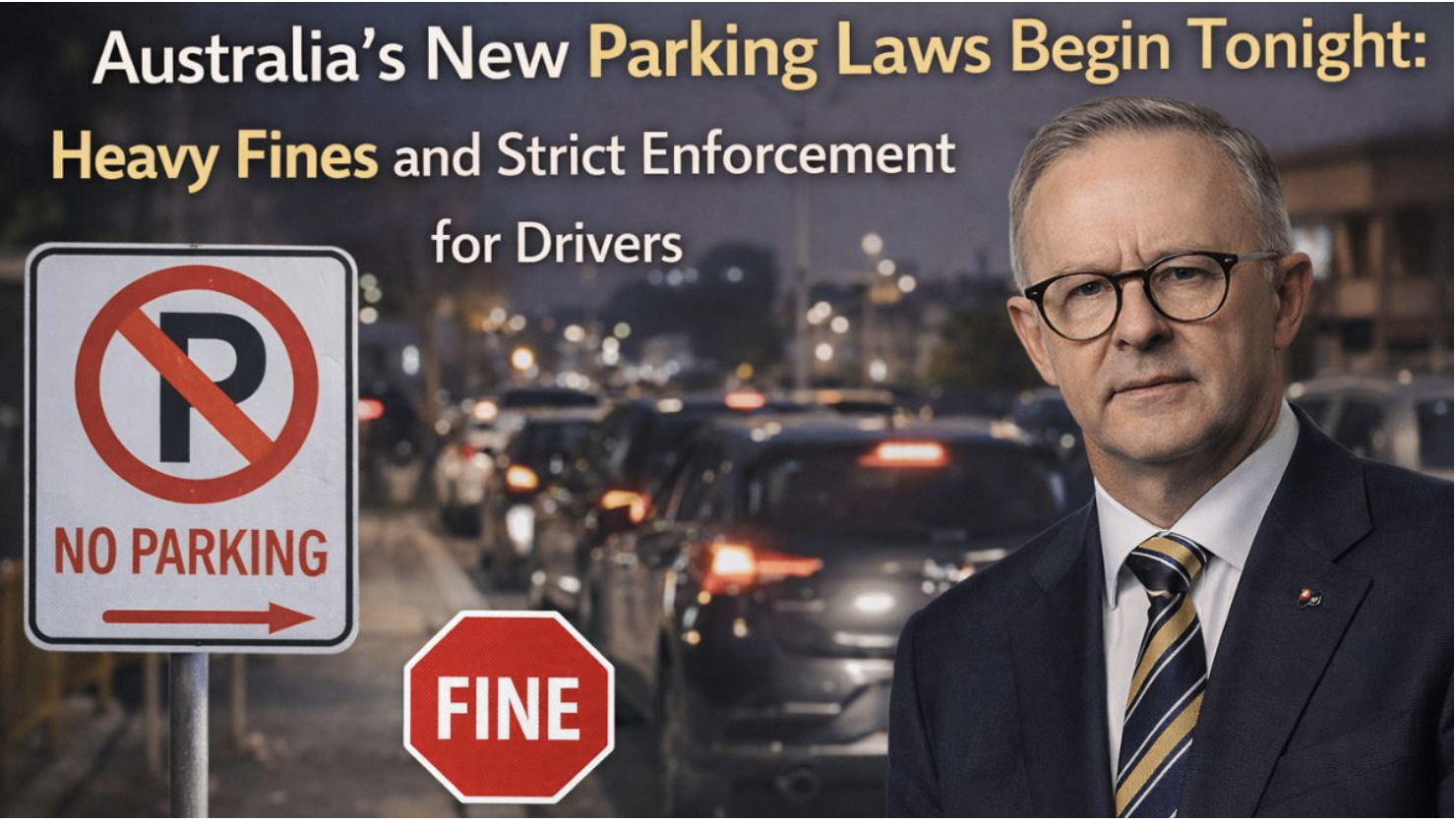
Parking regulations across Australia have become significantly stricter in 2026, as state and territory authorities introduce tougher enforcement measures. The updated approach includes higher fines, expanded use of automated monitoring technologies, and clearer rules aimed at improving road safety, reducing congestion, and supporting the growing adoption of electric vehicles (EVs).
Stronger Enforcement Driven by Safety and Congestion Concerns
Authorities across major jurisdictions, including New South Wales, Victoria, and Queensland, have strengthened parking oversight in response to increasing urban congestion and safety risks.
Local governments are now deploying advanced systems such as AI-enabled sensors, mobile enforcement cameras, and automatic number plate recognition to detect violations more efficiently. The focus has shifted toward preventing unsafe parking behaviours, including blocking pedestrian pathways, obstructing traffic flow, and misusing designated parking areas.
Crackdown on Electric Vehicle Charging Bay Misuse
A major component of the 2026 reforms is stricter protection of EV charging spaces. Parking a non-electric vehicle in a designated charging bay—commonly referred to as “ICEing”—is now subject to substantial penalties.
- Fines for occupying EV charging bays without charging can reach several hundred dollars, with some jurisdictions imposing penalties exceeding $2,000.
- In New South Wales, Victoria, and the Australian Capital Territory, enforcement agencies treat these violations as high priority.
- Queensland has reinforced a “park and charge” requirement, ensuring bays remain available for active use.
These measures are intended to support EV infrastructure reliability and encourage responsible use as adoption increases.
Australia’s Age Pension Increased in March 2026 Indexation Update
Australia Updates Driver Licence Requirements for Older Motorists in 2026
Higher Penalties for Common Violations
Routine parking offences now carry steeper fines, particularly where safety is compromised. Offences such as overstaying time limits, parking in clearways, or stopping too close to intersections are subject to increased penalties.
Fines for standard breaches typically start at around $300 and can rise significantly for more serious infringements. Authorities are also increasing enforcement in high-risk areas, including school zones, pedestrian crossings, and emergency access routes. Repeat or severe violations may result in vehicle towing, adding further costs for drivers.
Stricter Rules for Accessible and Permit Parking
Regulations governing accessible parking have also been tightened. Only vehicles displaying valid permits are permitted to use designated disability parking bays, with misuse attracting some of the highest penalties under current rules.
Residential parking schemes in densely populated areas have also been refined, with stricter limits on visitor parking and time allowances. Digital parking systems and mobile applications are increasingly being used to manage payments and monitor compliance in real time.
Guidance for Drivers
Drivers are advised to carefully check signage and road markings before parking, paying attention to time restrictions, permit requirements, and special conditions. The use of authorised parking apps can assist in managing sessions and avoiding overstays.
Maintaining safe distances—such as leaving adequate space near intersections and avoiding obstruction of footpaths or driveways—remains essential. Authorities emphasise that even brief violations can now be detected quickly through automated systems.
A Broader Push for Safer, Sustainable Streets
The 2026 parking reforms reflect a wider national effort to improve urban mobility, enhance safety for pedestrians and cyclists, and support sustainable transport initiatives. By complying with updated regulations, drivers contribute to more efficient road use and help reduce risks across Australia’s transport networks.
Leave a Reply